


Web3UAEReputation recovery
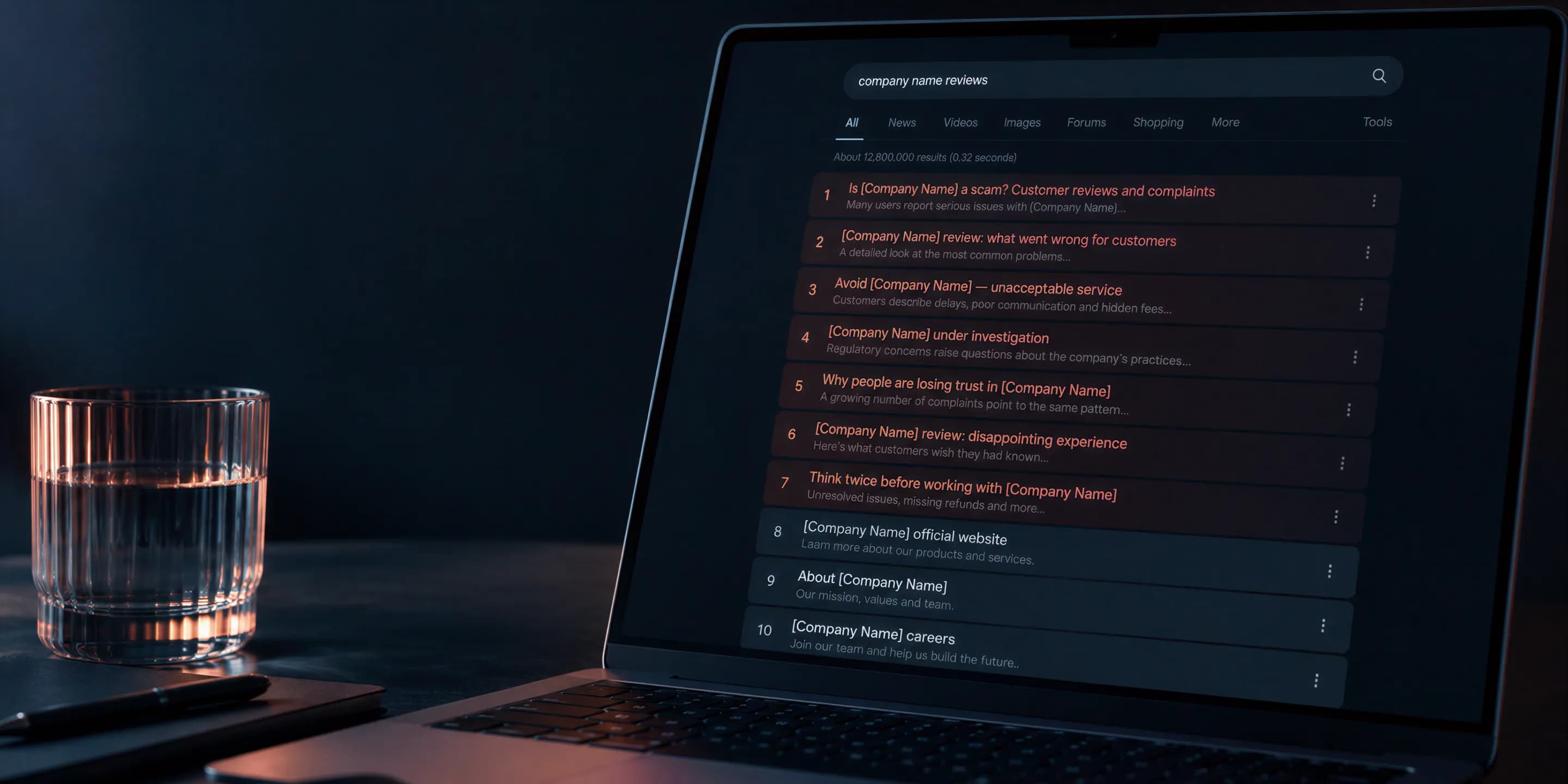
When seven of the first ten results tell people not to trust you
A confidential case about stopping a coordinated disinformation campaign from becoming the public identity of a fast-growing technology company
- ≈70%Negative content in Google’s top 10
- 5 pagesCleared of negative results
- 2.5MUsers on the company’s website
- Global top 10Position in its specialist category
The search result had become the crisis
This was not a bad-news cycle. It was a search environment deliberately engineered to make one private conflict look like public consensus
The crisis01 / 04
The company was growing. Google was telling a different story
A former co-owner had spread hostile content across low-credibility websites, review platforms and YouTube. Approximately seven of the first ten Google results about the UAE-based Web3 company were negative.
Individually, many sources looked weak. Together, their repetition resembled consensus. For a prospective user, partner or investor, the attack appeared before the business did.
Respology lens
The strategic choice02 / 04
We refused to turn the company into a permanent defendant
The instinct in a crisis is to answer every accusation. In search, that can be a trap. Repeating a hostile claim may give it fresh language, new links and another reason to remain visible. A company can win an argument and still lose control of its identity.
The strategic brief therefore had to be larger than rebuttal: stop the campaign from defining the first impression, while giving stakeholders a more accurate and useful way to understand the business. The response needed discipline - deciding what required action, what should not be amplified and what evidence deserved to take its place.
Respology lens
The rebuild03 / 04
Do not fight ten links. Rebuild the evidence environment around the company
Respology approached the search landscape as an architecture. The first layer was diagnostic: priority queries, territories, result types and the negative footprint had to be understood as one moving picture. The second was containment and displacement - reducing the visibility of hostile material while strengthening credible sources capable of earning durable positions.
The third layer was positioning. New visibility could not be generic corporate content created merely to occupy space. It had to express what the company was becoming: its expertise, category relevance, market development and reasons to be trusted. Monitoring then allowed the system to respond as rankings changed, rather than treating one clean screenshot as the finish line.
Respology lens
The result04 / 04
Five pages of distance - and room for the business to move on
Negative content was pushed beyond the first five pages of Google. Search could again function as due diligence rather than an extension of an ownership dispute.
In the period that followed, the company opened offices in Singapore and South Africa, grew its website user base to 2.5 million and entered the global top ten in its category. Reputation work did not create those outcomes on its own; it stopped a manufactured narrative from becoming the lens through which they were judged.
Respology lens